Sunday, March 28, 2010

Passion/Palm Sunday, Year C


Were you there when they crucified my Lord?
Oh…Sometimes, it causes me to tremble, tremble, tremble!
Were you there when they crucified my Lord?


That words of that African-American spiritual came to my mind and heart several weeks ago as I read the cover story in a recent issue of The Economist magazine (March 6-12). The article was entitled, “Gendercide: What Happened to 100 Million Baby Girls?” It opened with a description of a visit that the Chinese writer Xinran Xue made to a poor family in a rural province of that vast country.

She had just sat down in the kitchen as the woman of the house was giving birth. There was a moan of pain, a series of loud cries, and then silence…followed by a low sobbing sound. The author then heard a male voice brusquely mutter, “Useless thing!”

Then Xinran Xue heard some movement in the slop pail that had been placed behind her. To her shock, she saw a tiny foot poking out of the pail. She started to get up to reach it, but two policemen who had accompanied her to the house held her down and told her, “Don’t move, you can’t save it, it’s too late.”

She protested, “But that’s…murder…and you’re the police!” Then the little foot stopped moving. Xinran Xue objected, “That’s a living child!”

But an older woman came over to her and tried to comfort her. “It’s not a child,” she said, “It’s a girl baby, and we can’t keep it. Around these parts, you can’t get by without a son. Girl babies don’t count.”

Tragically, this is a story that could be told not only in China but in India, South Korea, Bosnia, Belarus, and too many other nations of the world, especially in Asia and Eastern Europe. Girls by the millions are aborted, neglected, exposed, and killed because they are perceived as not as valuable as boys. In many of these same countries, this discrimination persists throughout women’s lives and is manifested in the destruction of girls’ schools, so-called “honor killings,” and the denial of the most basic civil and human rights.

“Were you there when they crucified my Lord?” the old spiritual plaintively asks. As people of faith who believe in the sacredness of human life from conception until natural death, in the fundamental dignity and equality of each human being, and that God made us male and female in God’s own image and likeness, we can only answer, “Yes” when we think of that little girl in China whose life on earth was ended as soon as it began.

We can only answer “Yes” when we see the mangled bodies and limbs of people in Iraq and Afghanistan who are the victims of terrorist bombings. We must answer “Yes” when we read of yet another young man in Detroit, Milwaukee, Chicago, or any other major city in our own country whose life has been cut short by a bullet—a story now so familiar that it is no longer front page news. We can only answer “Yes” when we hear of a man like Congressman John Lewis—who nearly gave his life to the civil rights struggle—subjected to insults and racial slurs not on the streets of Birmingham or Selma in the 1960’s but in front of the U.S. Capitol last weekend as he prepared to vote on the healthcare bill.

The Passion of Christ is not a past event only. It is all around us, every day, not only in the events that make headlines but also in our personal and family struggles: sickness and sadness; poverty and pettiness; dysfunction and divorce; and when the bills are piling up and the money’s running short—all those times when, like Jesus on the cross, we feel like crying out in the words of Psalm 22, “My God, my God, why have you abandoned me?” (Ps 22:2)

The horrors and pain of the cross might cause us to forget that the greatest power of the Lord’s Passion is not in suffering and pain but rather in love. It is the love of God—beheld in the incarnation, life, death and resurrection of Jesus—that we celebrate today and will celebrate in a very special way in the coming week.

It was love that enabled Jesus, in the words of St. Paul in our second reading, to disregard grasping for equality with God and instead to empty himself and take “the form of a slave.” (Phil 2:7) It was in love that he humbled himself and became “obedient to the point of death, even death on a cross.” (Phil 2:8) This is the love that we celebrate when—following the command and example of Jesus—we share in the unleavened bread and wine that are his body and blood.

On this Palm Sunday—Passion Sunday—can we accept that love, and are we willing to live out its consequences? Today we are called again to walk with Jesus as disciples and servants with:

• Well-trained tongues—Through prayer, reflection, and a growing knowledge of the Bible and our Catholic tradition, to be able to “speak to the weary a word that will rouse them.” (Isa. 50:4)

• Strong backs—Willing to help our sisters and brothers, especially those who are poor, marginalized and vulnerable, to carry their burdens.

• Flinty faces—Able to deal with the misunderstanding, opposition, and even the persecution that sometimes comes from fidelity to the Gospel.

• Emptied selves—Ready to grow in holiness and usefulness to God by letting go of our sins—especially the deadly sins of pride, anger, envy, greed, lust, gluttony, and laziness.

As we begin this Holy Week, may the Passion of the Lord be our passion, too. +

Image from ccdumaguete

Sunday, March 14, 2010

4th Sunday of Lent, Year C

He grew up as a happy child with two loving parents in Portugal. But at the age of eight, he was taken away under mysterious circumstances and ended up on the other side of Spain. There he was abandoned and left to fend for himself.

He managed to survive by whatever means he could, and at age 22 he joined the army. Having long since abandoned the Catholic faith of his youth, he turned to a life of violence and dissipation. It wasn’t until he was 40 years old, after nearly two decades of violence, drinking and carousing, that he began to take stock of his life. Horrified at who he had become, he made a pilgrimage to Santiago de Compostela, perhaps the most famous and important shrine in Spain.

He then decided to return home, only to find that both of his parents had died years earlier, his mother (it was said) of a broken heart. Bearing the weight of so many years of debauchery and now the added burden of his parents’ deaths, he experienced profound remorse, which he tried to assuage with all kinds of severe penances. He publicly renounced his sins in the town square and even considered going to North African to offer himself as a martyr. In fact, he was so effective denouncing himself that the authorities were convinced he was mad.

He was sent to an asylum where, in keeping with the limited knowledge and prejudices that prevailed at the time, he was beaten daily with a chain. He was so interiorly wounded that he not only accepted this abuse but welcomed it as a form of penance. Fortunately, however, a famous preacher of the time went to visit him. After hearing the man’s story, the priest concluded that he was not mentally ill but rather spiritually sick, overwhelmed with grief and guilt.

After obtaining the man’s release from facility, the priest encouraged him to continue leading a life of penance—but one that would be a much more powerful and positive witness. So the man embarked on a life of service. He opened a book store and gift shop that helped raise money for his real ministry: a shelter and hospitality center for the poor, sick and homeless, and travelers of all kinds. At times their numbers would swell to over 100 and he would wonder how he and the ministry would survive. In one letter he wrote:
Since this house is open to everyone, it receives the sick of every type and condition: the crippled, the disabled, lepers, mutes, the insane, paralytics, those suffering from scurvy and those bearing the afflictions of old age, many children and above countless pilgrims and travelers….

And for all this no payment is requested, yet Christ provides. I work here on borrowed money, a prisoner for the sake of Jesus Christ. And often my debts are so pressing that I dare not go out of the house for fear of being seized by my creditors.

Despite so many hardships and obstacles, he continued until his body gave out and he died at age 55. Today a religious order bears his name: the Brothers Hospitaller of St. John of God. The order’s motto is simple: caritas—i.e., charity or love in action. St. John of God is the patron saint of hospitals, patients and nurses. This prodigal son who returned home then made a home for others.

I sometimes wish there was a sequel to the familiar story of the Prodigal Son that we heard in today’s gospel reading. It would be one in which the younger son worked hard and long in thanksgiving for the grace and welcome that his father had extended to him. The older son and his younger brother would be reconciled.

But in reflecting on such a sequel, particularly in light of today’s other Scripture readings, I realize that the story I would like written is really about me. After all, I am the one who needs to grow in thanksgiving and to be reconciled with others! St. Paul reminds us in our second reading that in Christ we each are “a new creation.” Through the Sacrament of Baptism we are initiated into a life of discipleship, which includes “the ministry of reconciliation” and being “ambassadors of Christ.” But none of us gets there quickly.

Our passage from the Book of Joshua recounts the arrival of the people of Israel in the Promised Land, signaled by the fact that they no longer had to eat the manna but instead could eat “of the produce of the land.” Their celebration of Passover helped them to remember all that they had gone through to get there and, more importantly, the One who had brought them there. We have a similar opportunity each time we celebrate the Eucharist. The Mass gives us a formal opportunity in the Penitential Rite to “call to mind our sins,” but it is just as important—perhaps even more these days—to pause to call to mind our blessings! The period of silence after communion is a great time to do that.

Part of the power of the parable of the Prodigal Son is that it is a story that we ourselves could tell. All of us can probably recall a time (or times) in our lives when we have squandered the blessings that received, and it may only have been when we found ourselves soiled by our own mistakes and hungry for something better that we came to our senses, made the decision to “turn our lives around” by turning back to God, and started the long journey back to him.

The good news that Jesus gives us today is that once we begin that journey of repentance, reparation, reconciliation, and renewal God is more than ready to reach out to us and welcome us home. The challenge he gives us is to become more and more like the Father in our relationships with each other, even when our own feelings and even our sense of justice drive us to be more like the older son.

The scribes and Pharisees were scandalized by Jesus’ fellowship with sinners. Imagine what they would think if they came to any parish and scanned the pews on any given Sunday! Thankfully for us the scandal of God’s grace in Jesus Christ is still alive. May it remain alive—not only for us but in us as well! +

Images: Prodigal Son by Rembrandt, 1669

Sunday, March 7, 2010

3rd Sunday of Lent, Year C

A little over a week ago, I was blessed to find myself looking down into the crater of the Irazu Volcano, located between San Jose and Cartago, Costa Rica. At over 11,000 feet above sea level, it is both beautiful and foreboding. Just outside its largest crater, Irazu (from indigenous words meaning “peak of thunder”) features a large slate-grey plateau covered in volcanic ash. It is a reminder of the time it was last active forty-five years ago, when it sent ash showering down upon the nearby towns and cities and glowing rocks tumbling down its sides.

It was at Irazu that I had a “burning bush experience”—one of those times in life when one is given the privilege of sensing God’s presence in a particularly powerful way. As we traveled on the road that wound from Cartago up to the peak, we felt the temperature drop five, ten, and finally twenty degrees. After looking down into the multi-hued crater, now filled with water, I turned around and saw a cloud, nudged by a gentle and whispering wind, gracefully make its way across the ash-covered plateau, leaving a cool mist in its wake.

I stopped where I was. Crouching down and pressing my hands together, I rested my elbows on my knees and spent a moment in silent meditation, attentive to the sights, sounds, and smells of the moment. I was on holy ground.

I suspect that many of us have such moments in our lives. Some are inspired by nature and others by people. Some, like an altar call at a revival, happen in the midst of a group; but others are solitary experiences of finding God in the desert of silent meditation or even in the midst of darkness.

Our first reading from Exodus recalls the original (and quite literal!) “burning bush experience” of salvation history. On the top of Mt. Horeb, Moses encountered God who revealed not only his identity and name (“I AM”) but also his compassion and plan to liberate his people. Not only that, this meeting between God and Moses also revealed that we need not be saints or spiritual Olympians to be so blessed by the Lord.

To say that Moses wasn’t perfect when he was called by God is an understatement. He had committed murder and was a disgraced member of Pharaoh’s household (Exodus 2:11-15) who found himself in the land of Midian, reduced to shepherding for his father-in-law. Yet God still spoke to him in a remarkable way and called him to lead his people from slavery to freedom.

Caution: not everything that we experience in life, even when it is extraordinary, is a manifestation of God. Sometimes bushes burn merely because they are on fire! It can be tempting to read particular meaning into events based on our own limited perceptions or even our prejudices. Recently, a prominent televangelist was roundly criticized for telling his audience that the devastating January 12 earthquake in Haiti was divine retribution against the Haitian people for supposedly making “a pact with the devil” centuries ago.

While it is true that our actions—good or sinful—often have consequences, even serious ones, in our gospel passage from Luke 13 Jesus challenges the assumption that there is always and everywhere a cause and effect relationship between sin and suffering. Sometimes, as with the building collapse in Siloam, bad things happen by accident or forces of nature. At other times they come at the hands of others, including calloused tyrants like Pontius Pilate.

It’s natural to try to assign blame or responsibility for what happens in our lives and those of the people around us. At its best, this tendency is part of our desire to make sense of our world. At its worst, it can be no more than an exercise of hubris, a vain attempt to control the people and things we ultimately cannot. Things do have explanations; but not every explanation is the right one.

In reminding his disciples of the tragic and unjust deaths of the people in Siloam and the Galileans whose blood Pilate mixed with their sacrifices, Jesus was trying to get them to ponder their own mortality. Thus in our gospel passage his reflections on those incidents were followed by the same warning: “But I tell you, if you do not repent, you will all perish as they did!”

We may not be able to control when or how we die, but we can control how we choose to live; and God will hold us accountable not for how we died but rather for how we lived. The Galileans who were victims of Pilate and those who were killed in the collapse of the tower in Siloam died suddenly. Disasters like the recent earthquakes in Chili and Haiti remind us of the fragility of life and that none of us are guaranteed tomorrow. They are invitations for us to (re)evaluate and reorder our priorities and our lives.

Today we have the gift of another day of life and the chance to live an even deeper commitment to the Gospel. Even more, we have the promise that God is willing to work with us. In our Responsorial Psalm (103) we heard that, “The Lord is kind and merciful.” In the parable of the gardener and the fig tree, Jesus revealed his Father’s patience and forbearance as well as his own dedication to cultivating and fertilizing us so that we may bear fruit as his disciples. The spiritual disciplines of Lent—prayer, fasting, and almsgiving—are part of that process.

As we grow in the Lord we begin to realize something even more amazing than what Moses beheld on Mt. Horeb: we, too, can become “burning bushes,” on fire with the Holy Spirit and speaking the word of God—a word of compassion, hope, and liberation for a world that sees so little of it. When that happens, our homes, our churches, our schools, our neighborhoods, our nation and even our world can become “holy ground”…and we won’t have to climb a mountain or gaze into the mouth of a volcano to know it. +

Friday, February 26, 2010

2nd Sunday of Lent, Year C

I began this homily 35,000 feet in the air in route from Detroit to Atlanta. It was the first leg of a journey that would ultimately take me to Cartago, Costa Rica to plan a meeting of Capuchin friars in the Americas in September 2011 to address the challenging issue of immigration in this hemisphere.

Because I fly so much, I had received a free upgrade to Business Class. After years of flying in coach, life in “the forward cabin” was a revelation! Each of us were treated to our own “pod,” complete with an entertainment system featuring satellite TV, unlimited drinks and snacks from the flight attendants, internet access, and seats that had seven buttons that controlled the foot and head rests, gave you a massage, and even allowed the seat to become a bed.

It was quite an experience. I found myself echoing St. Peter’s words in our gospel in a way I had never imagined: “Master, it is good that we are here!”

Then we landed. Atlanta Hartsfield-Jackson Airport is among the busiest in the world; and after a walk of about fifteen minutes to the area near my connecting flight, I had a three-hour layover. I got on the plane from Atlanta to San Jose, Costa Rica…and we were delayed about half an hour due to mechanical problems. I wasn’t on the mountain anymore!

Our lives have many different “moments on the mountain,” those times when we experience joy, wonder, awe, excitement, and mystery just as the disciples did at the Transfiguration of the Lord: a wedding day or graduation; standing before a vast and starlit sky; watching a thunderstorm roll across the plain; having a half-court or mid-field seat for the championship game; getting a new job or promotion; or beholding the ultrasound image of a child in the womb.

So, too, do we experience the times when what happened “on the mountain” is just a memory: when the honeymoon is over and we have to deal with the ups and downs and routines of married life; when the diploma is on the wall and we are still looking for a job; when we’re driving through the grey slush that all-too-quickly seems to follow the pristine beauty of a fresh snowfall; when our team suffers a devastating loss so soon after a thrilling victory; and when that innocent child in the womb has become a teen-ager with “issues.”

Those are the times when it does not seem “good that we are here.” Those are the times when we pray with the psalmist: “Hear, O Lord, the sound of my call; have pity on me and answer me….You are my helper: cast me not off.”

The good news that the scriptures give us today is that God is with us through all of it, whether we’re high on the mountains, low in the valleys, or making our way through the plains; whether we’re in first class, coach, or at the gate enduring another delay. God has promised it!
In our first reading, we witnessed the covenant that God made with Abraham, our ancestor in the faith. The ritual that marked this occasion was called “cutting the covenant,” and as we saw from Abraham’s sacrifices that is literally what he did. Sr. Diane Bergant, CSA, an Old Testament scholar, notes that this action was a very dramatic way of symbolizing the curse that would befall anyone who broke such a covenant. It was their way of saying, “If anyone breaks this solemn obligation, may they become like these animals!”

God and Abraham weren’t playing; and while the descendants of Abraham and Sarah broke that covenant in various ways over the centuries—sometimes to their great suffering—God remained ever faithful. That fidelity was underscored in the person and mission of Jesus; and it was ultimately confirmed on the cross.

It is important to remember that Jesus’ Transfiguration before Peter, James and John on the mountain came right after Peter’s confession that Jesus was the Christ and the Lord’s first prediction of his passion, death and resurrection (Luke 9:19-27). He had brought them into the valley; and now he was bringing them up the mountain, trying to strengthen them for the rest of the journey on the plain and some even deeper and darker valleys ahead.

The Lord does the same for us as a church through the Liturgical Year. Our annual pilgrimage through the valleys of Advent and Lent lead us to the “mountaintop” seasons of Christmas and especially Easter. Mirroring life for most of us, however, we spend nearly two-thirds of the church year moving through the plains of Ordinary Time. “Thus recalling the mysteries of redemption,” the Second Vatican Council proclaimed in Sacrosanctum Concilium, The Constitution on the Sacred Liturgy, “she [the Church] opens up to the faithful the riches of her Lord’s powers and merits, so that these are in some way made present for all time; the faithful lay hold of them and are filled with grace” (102).
The reality, though, is that we don’t always appreciate or lay hold of the Lord’s powers and merits, even though they are ever-present and available to us. This can happen when we find ourselves “in the valley,” but it can happen just as easily when we find ourselves “on the mountain.” St. Paul had to contend with just such a community in the early church at Philippi.

Infected with the Gnostic heresy, they had embraced a dualism that allowed them to compartmentalize their lives. Considering themselves spiritually enlightened and already saved, they continued to live in self-indulgent and sinful ways. They had forgotten that the Christ who had saved them did it on the cross—as one of us—and had called for disciples and all who would follow them to be holy and whole: committed to God in mind, spirit and body.

His exhortation for them to “stand firm in the Lord” is our call, too. We can respond in faith, knowing that God already stands firm with us—on the mountains, in the valleys, and everywhere in between…even on the cross. +

Sunday, February 21, 2010

1st Sunday of Lent - Year C

Last Tuesday was a special day in cities with large Polish populations—places like Milwaukee, Chicago, Detroit/Hamtramck, Buffalo and Pittsburgh. It was Pazcki (poonch-kee) Day. For the uninitiated, paczki are small jelly-filled donuts that are made and consumed in large quantities on the day before Ash Wednesday. National Bakery in Milwaukee made and sold 145,000 last Tuesday!

Paczki were traditionally made in the home in an effort to use up the lard, flour and other ingredients that would be foresworn as part of the Lenten fast. Perhaps reflecting the Slavic genius for making indulgence penitential at the same time, the traditional paczek filling was prune-flavored. In more recent years, however, it has been joined by raspberry, lemon, blueberry and other varieties.

Whether it’s the celebration of Paczki Day in Milwaukee, Carnival in Rio, Mardi Gras in New Orleans or simply Shrove Tuesday, the day before Lent has long been a time to indulge (and overindulge) in the things that tempt us—the very things we hope to leave behind in Lent.

The only problem is that our temptations don’t get the message! They stick with us and often even intensify in the midst of our fasting, prayer and almsgiving. Just ask a smoker who has given up cigarettes, a drinker who has sworn off alcohol or a chocolate lover who is abstaining from her favorite desserts and snacks.

Lent is our time of our liturgical year that we find ourselves in the desert. Like Jesus in today’s gospel we are driven there by the Holy Spirit. Like the Lord we are also “tempted by the devil.” Lest we lose heart, we need to see that these temptations are as much evidence of our commitment as of our weakness.

Our gospel passage from Luke 4 comes at a pivotal moment in the life of Jesus, between his baptism in the Jordan by John (Luke 3:21-22) and his prophetic proclamation in the synagogue (as well as his potential martyrdom) at Nazareth (Luke 4:14-30). Just as his forty days in the desert tested and prepared Jesus for his mission and public ministry, so the Church gives us Lent to be readied to better fulfill our own vocations.

Today’s Scripture readings present us with five different temptations that are a common part of our pilgrimage of discipleship in Christ:
  • The temptation of forgetfulness and ingratitude.
  • The temptation of thoughtless faith.
  • The temptation of instant gratification.
  • The temptation of materialism and idolatry.
  • The temptation of presumption and carelessness.
In our first reading from Deuteronomy 26, Moses warns us against forgetfulness and ingratitude. Nearing the end of their desert wandering and preparing to enter the Promised Land, he feared that the people of Israel would soon forget God and his commandments. Therefore he instituted in their law one of many forms of institutionalized thanksgiving.

In this particular passage, he commanded them to not only bring forth the first fruits of their harvest to God but also to remember or recall the great moments of their salvation history: the providential visit of Jacob, “a wandering Aramean,” to Egypt; the prosperity of the nation even in an alien land and in the midst of oppression; liberation; and now their place in “this land flowing with milk and honey.” Moses knew something about human nature and how easily we can get comfortable and forget our blessings.

Centuries later, St. Paul exhorted the early church in Rome to confess that the salvation God had once promised to the people of Israel had been granted to all through the life, death and resurrection of Jesus. Confession was important to Paul because it represented a conscious decision to accept this life-changing gift. Most people limit their understanding of confession to a statement of what they have done (wrong). Paul invites us to see it as something more: a proclamation of what God has done and continues to do for us even today.

As followers of Jesus, like Paul, we are called to proclaim the good news; and even more, like Jesus himself we have also been gifted with the Holy Spirit to fulfill our vocations. But if we have been blessed with the gifts we also have to contend with the challenges and temptations:
  • Changing stones into bread—Have we looked for the emotional highs of “exciting” liturgies or high-profile ministries where we get a lot of kudos but neglect times of quiet contemplation and avoid positions of humble service?
  • Seeking worldly power and glory—Have we succumbed to the illusion that what really matters is being rich and famous or are we dedicated to following God’s will, even if it demands sacrifice? 
  • Testing God’s providence and mercy—Have we allowed sinful habits to fester within us without making a real effort to change or worse, despairing that change is even possible?
Temptation is inevitable. Yielding to that temptation is optional. Victory over temptation is possible because salvation is our destiny. The same Spirit that was with Jesus in the desert is with us today. +

    Friday, February 19, 2010

    About


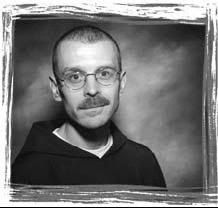
    Fr. John Celichowski, a Capuchin-Franciscan friar, is the Provincial Minister of the Province of St. Joseph. Prior to his election in June 2008, he was Pastor of St. Martin de Porres Parish, Milwaukee. He also served in the Capuchin Province of St. Joseph’s Corporate Responsibility Program, as Director of the Province’s Office of Pastoral Care and Conciliation, and as a member of the Provincial Council. In addition, he also served on several church and community boards and organizations, including Milwaukee Inner City Congregations Allied for Hope (MICAH), the Adult Learning Center, Allied Churches Teaching Self-Empowerment (ACTS), and the Interfaith Center on Corporate Responsibility in New York.


    Since March 2006 Fr. John has served on the Board of Directors of Franciscans International, a nongovernmental organization that promotes peace and human rights at the United Nations. He also continues to serve on the International Justice, Peace and Ecology Commission of the Capuchins, based in Rome. He previously served as Pastor of Our Lady Gate of Heaven Parish, Chicago (1993-97) and as Pastor of St. Benedict the Moor Parish, Milwaukee as well as Chaplain to the St. Benedict Community Meal (2000-2004).

    A Milwaukee native, Fr. John made his first profession as a Capuchin in July 1988, his perpetual profession in August 1992 and was ordained to serve the church as a priest in June 1993. A 1980 graduate of St. Lawrence Seminary, he received a Bachelor of Arts degree (Political Science) from the University of Wisconsin-Milwaukee in 1984, a Master of Divinity degree from Catholic Theological Union (Chicago) in 1993, and a Juris Doctor (Law) degree from Georgetown University (Washington, DC) in 2000. He is a member of the Wisconsin State Bar and the American Bar Association.

    His writings have appeared in several professional journals and magazines, including the American Indian Law Review, the Catholic Lawyer, and Celebration magazine, Origins, Worship and The Cord (a journal of Franciscan spirituality).